
How to Prepare Clay Soil and Improve Drainage Before Installing Sod
Clay soil is not automatically bad soil for a lawn. It can hold water and nutrients well, which is useful during hot Texas summers. The problem begins when clay is compacted, poorly graded or kept saturated for long periods. Sod laid over that surface may look finished on installation day but struggle to root, develop yellow patches or fail in the same low areas where the old lawn died.
Preparing clay soil for sod requires more than spreading a thin layer of loose material over the top. The property owner needs to understand where water enters the yard, where it slows down and how it leaves. High spots, low spots, hard construction fill, downspouts and irrigation patterns all affect the result.
Across Fort Bend County and the Houston area, soil can vary from one neighborhood to another and even across a single property. Homes near the Brazos River may have different soil and drainage behavior than newer subdivisions built on compacted fill. Richmond, Rosenberg, Sugar Land and Missouri City yards should be evaluated individually rather than treated as though every clay soil has the same problem.
Why Clay Soil Behaves Differently
Clay is made of very small particles with small pore spaces between them. It can store a great deal of water, but water may move through it slowly. When clay is compacted, those pore spaces become even tighter, reducing infiltration and oxygen around roots.
Dry clay can become hard and cracked. Wet clay can become sticky and easily compressed. Heavy equipment, repeated foot traffic and working the soil while it is saturated can damage its structure. Once compacted, the surface may shed water even though the deeper soil remains dry.
Healthy turf needs a balance. The root zone should hold enough moisture for grass without staying waterlogged. It should also contain enough air for roots and soil organisms. Drainage is not simply about making water disappear quickly. It is about allowing water to enter, move through and leave the root zone at a useful rate.
Begin with a Drainage Walk After Rain
The best time to understand a yard is during or shortly after a meaningful rain. The property owner should watch where water flows from the roof, driveway, patio and neighboring areas. Low spots, slow-draining sections and channels of erosion become easier to identify.
Standing water that disappears within a short time may be less serious than water that remains for a day or longer. A saturated area beside the house deserves more attention than a temporary puddle at the bottom of a shallow landscape swale.
The inspection should include downspouts, air-conditioning drains, pool equipment and irrigation valves. A persistent wet spot may be caused by a concentrated discharge or leak rather than the overall soil.
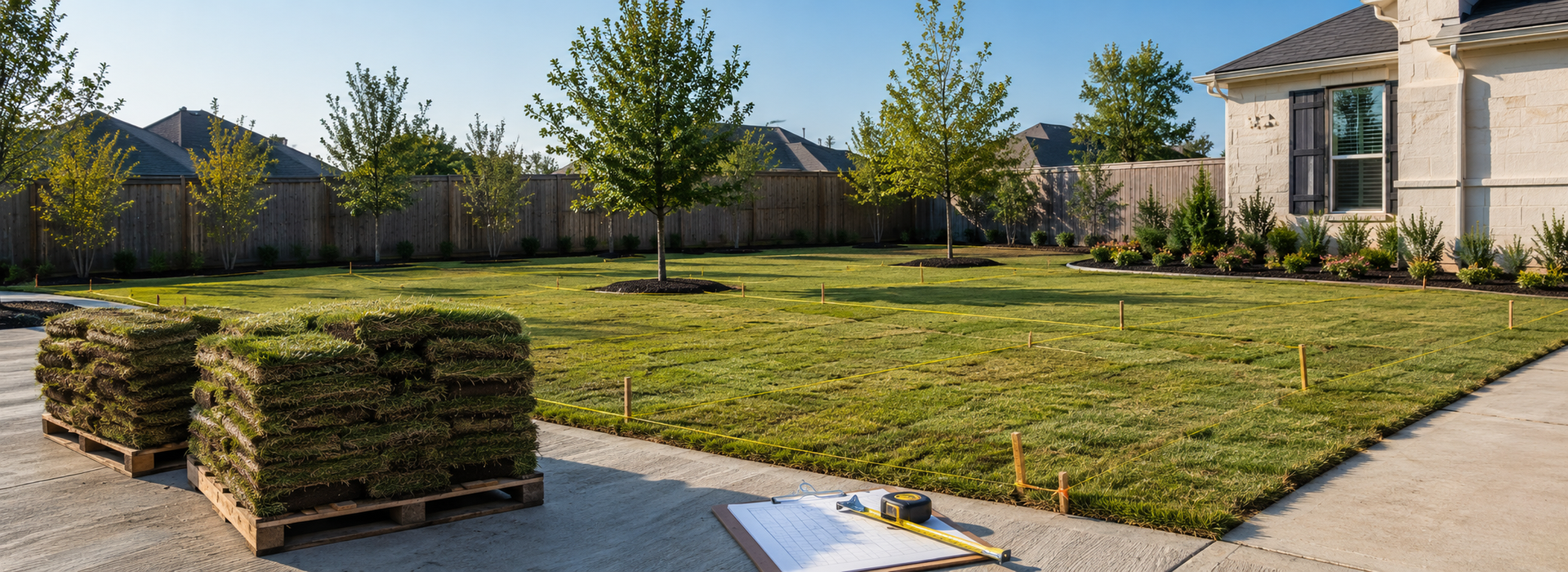
Photos taken during wet conditions can help a contractor or nursery understand the problem later. Measurements and a simple sketch can show how the grade relates to the house, fence and street.
Do Not Hide a Drainage Problem Under New Sod
Sod provides immediate ground cover, but it does not act as a drainage system. New grass may temporarily disguise low spots because the surface looks uniform. Once regular watering begins, the same depressions can fill and weaken the roots.
Waterlogged soil contains less oxygen. Roots may remain shallow, decay or fail to attach. The sod can feel spongy and may pull up easily long after installation. Yellowing, algae, mushrooms or thin growth may appear, although those signs can have more than one cause.
If the old lawn died in a pattern that matches standing water, the grade should be corrected before replacement. Repeating the same installation over the same low spot usually produces the same failure.
Check the Grade Around the House
The yard should direct surface water away from the foundation without sending it onto neighboring property or trapping it behind landscape edging. Foundation-adjacent grading deserves careful attention because incorrect changes can create building and drainage problems.
A property owner should not add large amounts of soil against siding, brick weep areas or other building components without understanding the consequences. Where the grade near the house is wrong, a qualified professional may be needed.
In the open lawn, the grade should be smooth and consistent. Abrupt humps and depressions interrupt mowing and water movement. A gentle surface that carries excess water toward an appropriate outlet is more useful than a perfectly flat yard that holds every rainfall.
The final elevation must also account for the thickness of the sod. Prepared soil should generally sit below sidewalks, patios and curbs so the top of the installed turf finishes near the correct level rather than creating a raised edge that traps water.
Identify Compacted Layers
A soil probe, shovel or long screwdriver can help reveal compaction. The test should be performed when the soil is moist but not saturated. If the tool enters easily for a short distance and then stops at the same depth across the yard, a compacted layer may be present.
New-construction sites often show this pattern. A thin layer of imported soil may cover dense fill compacted by trucks and machinery. Roots grow through the loose surface and then spread sideways when they reach the hard layer.
Simply adding another thin layer of topsoil may not correct the restriction. The compacted zone should be loosened when practical so the new and existing materials form a connected root zone. The depth and equipment required depend on the property and should be evaluated carefully around utilities and tree roots.
Remove Old Turf and Debris
Dead grass, thick thatch, stones, construction debris and large roots can prevent new sod from contacting the soil. The old lawn should be removed cleanly, especially when it failed from disease, weeds or uneven grade.
Buried debris is common on construction sites. Pieces of concrete, lumber and plastic may sit just below the surface and create dry or wet spots. Those materials should be removed before soil is added.
Existing healthy tree roots should be protected. Cutting large roots to create a perfectly flat lawn can damage the tree and create future instability. In heavily rooted shade, a shallow bed or mulch area may be better than forcing sod over the roots.
Loosen Clay Without Turning It into Mud
Clay should be worked when it contains enough moisture to crumble rather than smear. If a handful forms a sticky ribbon and coats tools, the soil may be too wet. Working saturated clay can destroy structure and create hard clods after drying.
When conditions are right, the upper root zone can be loosened with suitable equipment. Small patches may be worked by hand. Larger lawns may require mechanical preparation. The objective is to break compaction and create a consistent surface, not pulverize the soil into dust.
Utilities, irrigation lines and shallow tree roots should be located before deep cultivation. A contractor may be the safer choice for complex sites.
Use Amendments Across the Root Zone, Not as a Thin Layer
Organic matter can improve soil structure, but it should be blended into the soil rather than left as a disconnected layer. A thin blanket of soft material over hard clay can hold the sod temporarily while roots stall at the boundary below.
Fully decomposed compost or an appropriate soil blend may help create pore space and improve workability. The amount depends on the existing soil, grade and quality of the amendment. More is not automatically better. Excessive organic material can settle, alter elevation or hold too much water.
Property owners sometimes add sand to clay expecting instant drainage. Small amounts of fine sand mixed poorly into clay can produce a dense, concrete-like texture rather than an improved soil. Any mineral amendment should be chosen and incorporated with a clear understanding of the soil. A random bag-by-bag approach is not reliable for a full lawn.
Speedy Grass & Nursery carries landscaping materials and can help customers discuss the quantity needed for a project. The Landscape Rocks page includes bank sand among the available materials, but the correct use depends on the project and should not be assumed to solve every clay problem.
Correct Low Spots with Compatible Soil
Low areas should be filled with soil that is compatible with the surrounding root zone and compacted lightly enough to reduce future settling without creating another hard layer. The fill should be placed and graded before sod delivery.
Deep depressions may need to be built up in stages. A large amount of loose soil can settle after irrigation and leave the sod uneven. The area should be watered and checked before the final grade when time permits.
Low spots caused by a larger drainage pattern should not be corrected in isolation. Raising one depression may push water toward the house, fence or neighboring yard. The complete route of water should be considered.
Preserve Functional Swales
Some shallow depressions are intentional swales designed to move water across the property. Filling them because they look low can block drainage. A swale should be smooth enough to support sod and mowing while retaining its ability to carry water.
Sod in a swale needs strong soil contact and may require extra attention after installation. Fast-moving water can lift poorly rooted pieces. On steeper sections, the sod may need to be secured according to site conditions.
If the swale holds water instead of moving it, the outlet, slope or downstream obstruction should be evaluated. The problem may extend beyond the visible low point.
Consider Surface and Subsurface Drainage Separately
Surface grading solves many residential problems, but some properties have water emerging from below or collecting because a restrictive soil layer prevents downward movement. French drains, catch basins or other systems may be considered, but they must have a lawful and functional outlet.
A drain without adequate slope or discharge location can become an expensive buried container. Subsurface systems should be designed for the actual source of water, soil and site layout.
Chronic drainage near a foundation, pool, retaining wall or neighboring property should be evaluated by a qualified professional. Sod installation should wait until the water problem is understood.
Test Irrigation Before Final Grading
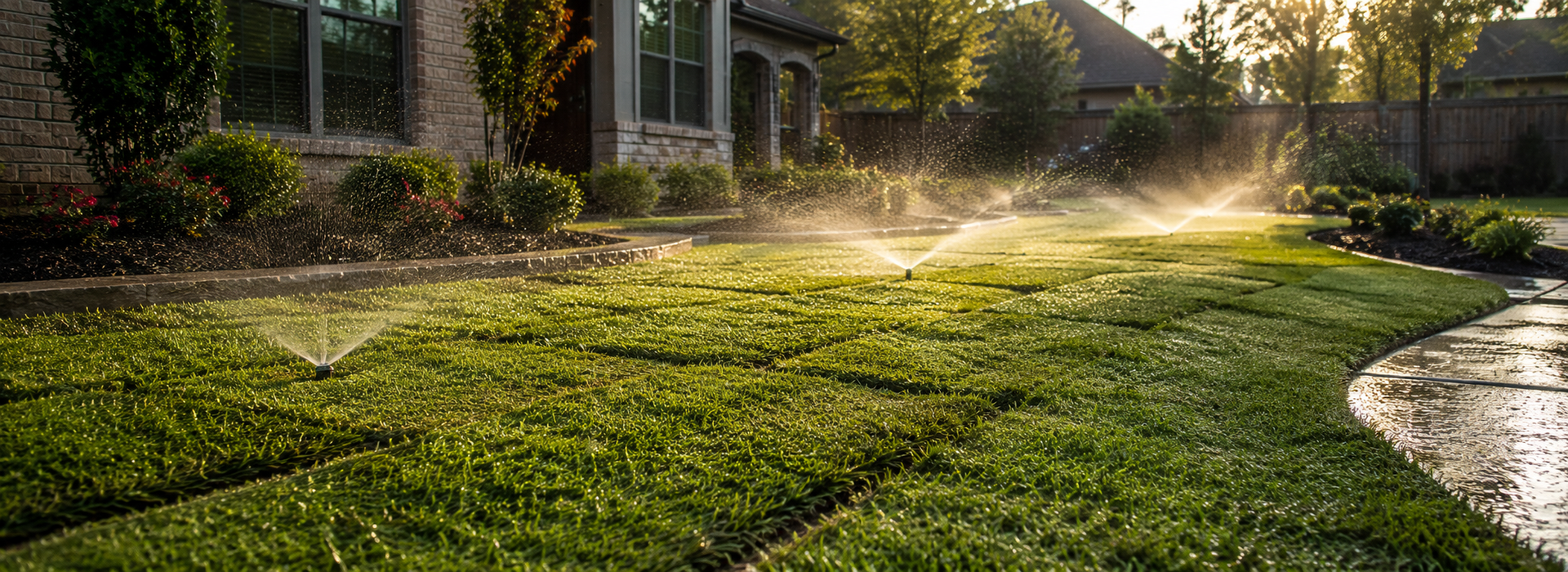
Broken lines and buried heads are easier to repair before sod is installed. Every zone should be run so leaks, poor coverage and runoff can be observed.
Sprinkler heads may need to be raised or lowered to match the final grade. Heads that finish too low can be blocked by grass. Heads that sit too high can be damaged by mowers.
Clay soil often benefits from cycle-and-soak irrigation. Shorter cycles separated by soaking periods allow water to enter slowly. The controller should eventually be adjusted according to the grass, season and weather rather than left on one setting all year.
Create a Smooth, Firm Final Surface
After soil improvement and grading, the surface should be raked smooth. Rocks, clods and debris should be removed. The soil should be firm enough that a person walking across it leaves only a shallow print.
A surface that is too fluffy will settle unevenly. A surface that is packed hard will resist roots and water. Light rolling or careful grading can help create the correct firmness.
The property should be checked from several angles. Small waves are easier to see when light is low across the surface. A long board or landscape rake can reveal humps and dips.
Lightly Moisten the Soil Before Installation
Prepared soil should not be powder-dry when sod is installed. Light moisture cools the surface and reduces the amount of water dry clay pulls from the sod. The ground should not be muddy or soft enough to rut.
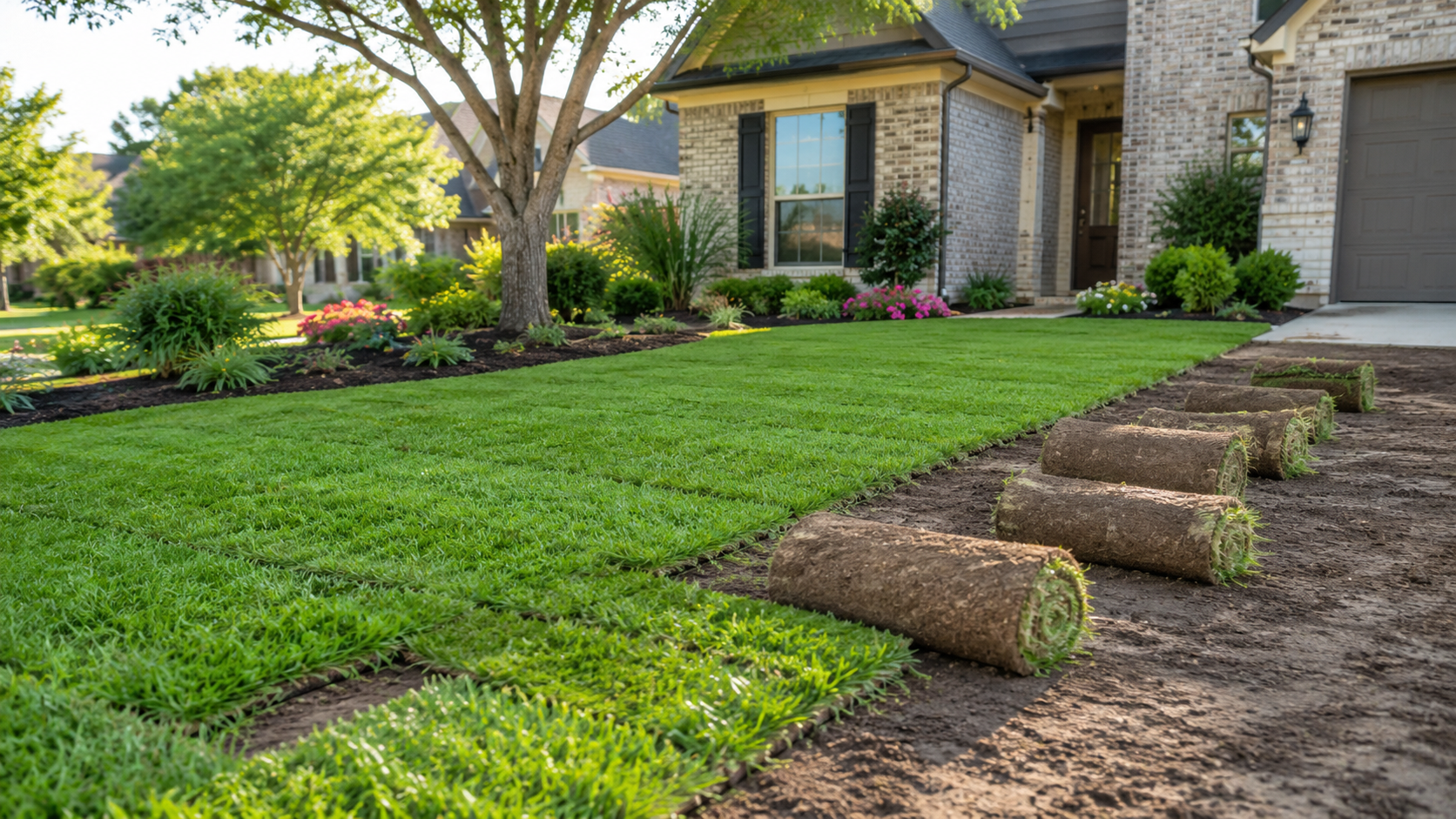
Sod should be installed promptly, fitted tightly and watered through to the soil below. Light rolling after the first watering can improve contact and reveal low areas that need immediate adjustment.
The watering schedule should account for clay’s slow infiltration. Runoff is a sign that the cycle is too long or the application rate is too high. Standing water indicates that the grade, saturation or drainage needs attention.
Choose Grass for Light and Use After the Soil Is Fixed
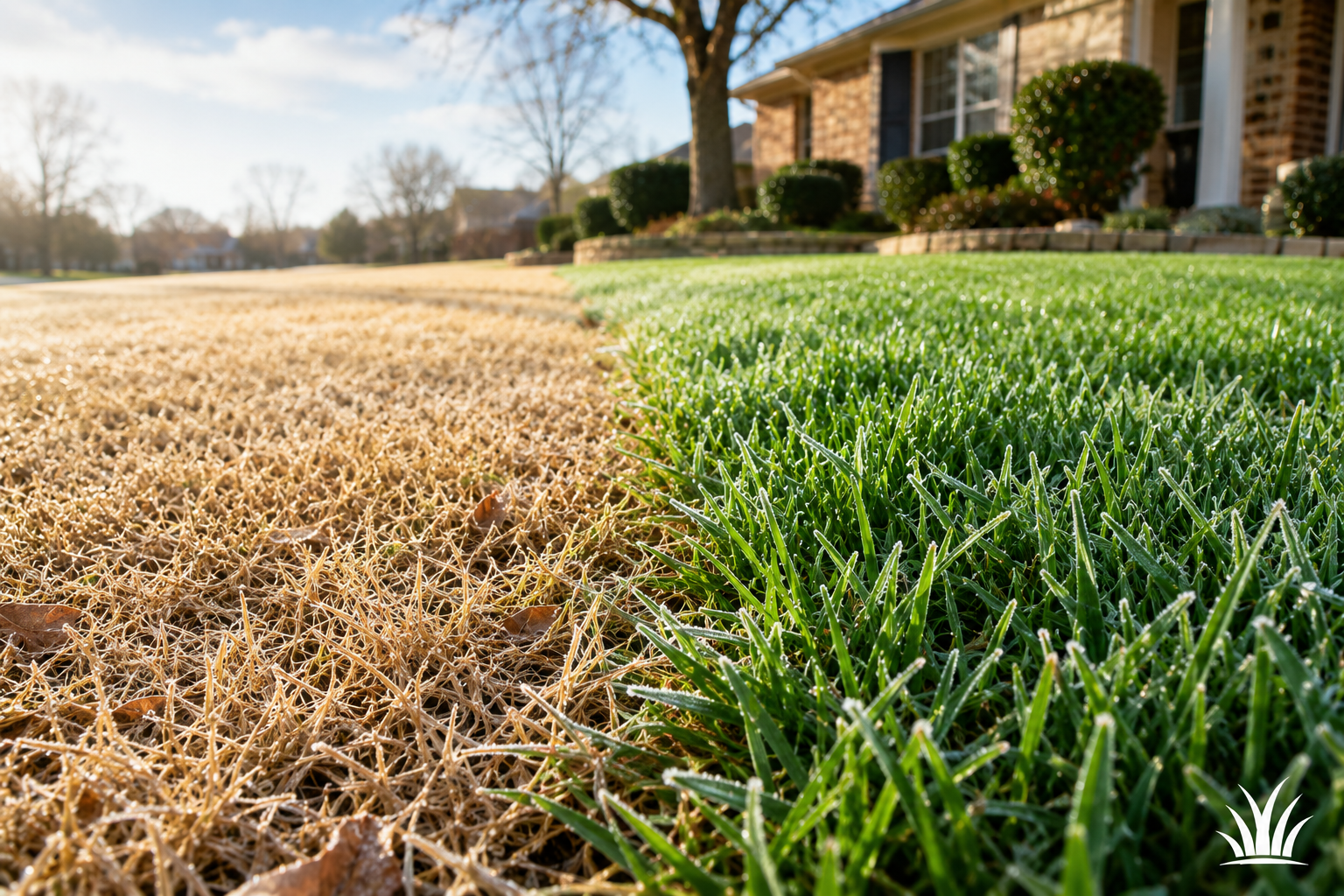
Soil preparation does not change a shaded yard into a sunny one. The grass must still fit the property. Bermuda performs best in full sun and heavy use. St. Augustine is often chosen for partial shade. Zoysia provides several options for mixed light, appearance and traffic.
The Sod Types page explains the varieties carried by Speedy Grass & Nursery. Soil, sunlight, traffic and irrigation should be considered together.
A well-prepared root zone improves the performance of any suitable grass. A poorly prepared root zone can make even the best variety look like the wrong choice.
Frequently Asked Questions About Clay Soil and Sod
Can sod be laid directly on clay soil?
It can be installed on clay when the soil is properly graded, loosened and able to drain. Sod should not be placed directly on hard, compacted or saturated clay without preparation.
Should sand be mixed into clay before sod?
Sand is not a universal fix. The wrong amount or particle size can create a dense mixture. Soil amendments should be selected for the actual site and blended through the root zone rather than added randomly.
How can a homeowner tell whether the yard is too wet for sod?
If water stands for long periods, footsteps sink deeply or the soil smears and sticks heavily to tools, the site may be too wet. Installation should wait until drainage is corrected and the soil is workable.
Will topsoil fix a low spot?
Topsoil can rebuild grade, but the larger drainage pattern must be considered. Filling one low spot may redirect water elsewhere, and deep loose fill may settle if it is not placed correctly.
Should clay soil be tilled before sod installation?
Loosening compacted clay can improve the root zone, but the soil should not be worked while saturated. Utilities, irrigation and tree roots should be considered before mechanical cultivation.
Can Speedy Grass deliver soil materials with sod?
Speedy Grass & Nursery delivers landscaping and nursery materials within a 100-mile radius of Richmond. Customers should contact the nursery to discuss current products, quantities, truck access and whether materials can be coordinated for the project.
Build the Lawn from the Soil Up
Sod performs best when water can enter the soil, excess moisture can leave and roots have enough air and space to grow. Clay can support a strong Houston-area lawn, but compaction, low spots and drainage problems should be corrected before they disappear beneath green grass.
Speedy Grass & Nursery helps homeowners, builders and landscapers throughout Fort Bend County and the Houston area plan sod and landscaping-material deliveries. Customers can review the delivery service or contact the nursery with photos, measurements and details about the soil and drainage conditions.
Recent Posts